
The Las Vegas Exhibitor's Content Checklist: What to Capture Before, During, and After Your Show

By Orange Box Studios | Las Vegas Convention & Corporate Media | orangeboxstudio.net
You spent months preparing for your Las Vegas trade show. The booth design went through four revisions. Your team flew in from three cities. Your product demo has been rehearsed until it is second nature. You are ready.
But here is the question most exhibitors do not ask until it is too late:
What content are you walking away with?
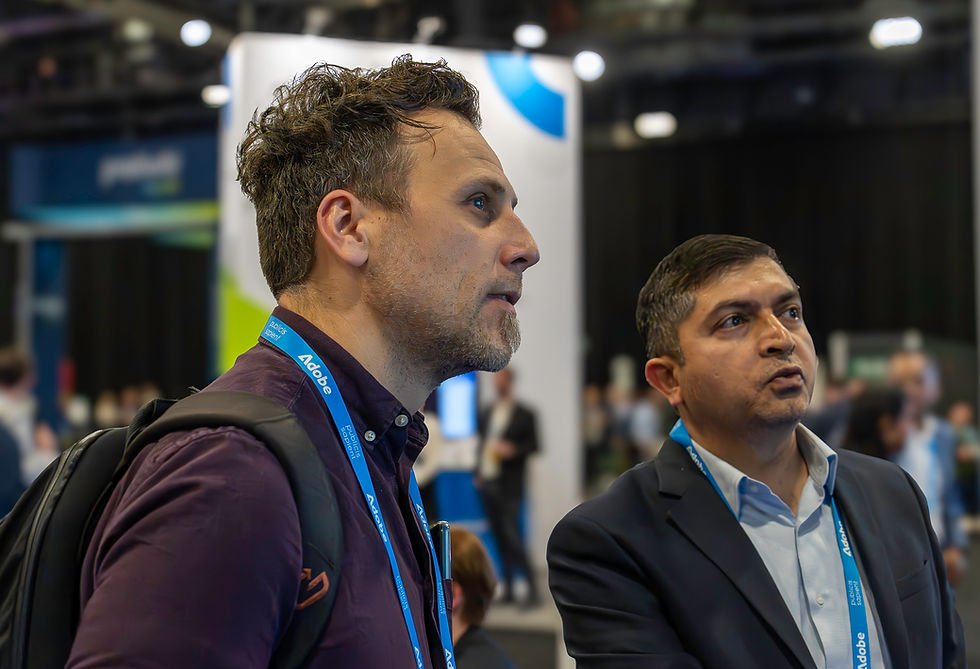
The Las Vegas convention circuit — CES, SEMA, NAB Show, World of Concrete, CONEXPO, SHOT Show, Adobe Summit, and dozens of others — represents one of the highest-density content production opportunities your company will ever have access to. In a single three-day show, you have access to your executive team, your top products, your best customers, industry press, and a professionally designed environment that communicates your brand at its best.
Most exhibitors capture almost none of it deliberately. They take some phone photos, maybe shoot a shaky walkthrough video, and leave Las Vegas with a stack of business cards and a folder of leads — but no durable content assets to show for the investment.
This checklist changes that. It is the framework we use at Orange Box Studios to plan convention media coverage for exhibitors at Las Vegas venues — and it is the same approach we recommend whether you are hiring a professional team, managing content capture in-house, or combining both.
Work through each phase before your next show. The exhibitors who treat their convention as a content production event — not just a sales event — extract dramatically more value from the same investment.
Why a Content Strategy Belongs in Your Pre-Show Planning
Most exhibitor planning checklists cover logistics: booth shipping, staff travel, lead retrieval systems, and meeting schedules. Content is almost never on the list — and that gap is expensive.
Here is what deliberate content capture at a Las Vegas trade show makes possible:
• Your social media stays active and engaged throughout the show — not silent until you return to the office
• Your booth investment generates marketing ROI for months or years after the event closes
• You build a content library that feeds your website, sales decks, press pitches, email campaigns, and executive positioning
• Your prospects who could not attend the show experience it through your content — extending your reach without extending your booth budget
• Your internal stakeholders and leadership team see the full impact of the show investment, not just the lead count
A single well-planned trade show shoot can produce 3 to 6 months of social media content, a refreshed homepage video, updated product photography, executive interview segments for LinkedIn, and testimonial clips from clients — all from one trip to Las Vegas.
The difference between exhibitors who extract that value and those who do not is almost never budget. It is planning. Specifically, it is deciding what you need to capture before the show begins — and having either the professional team or the internal plan to execute it.

PHASE 1: BEFORE THE SHOW
Pre-Show Content Planning and Setup
The most valuable content decisions you make happen weeks before the show floor opens. What you capture — and how well you capture it — is almost entirely determined by how well you plan in advance.
Define Your Content Goals First
Before you think about cameras or shot lists, answer these four questions:
• What is the single most important piece of content you want to walk away from this show with?
• Who is the primary audience for your show content — existing customers, prospects, press, internal stakeholders, or all of the above?
• Where will this content live — social media, your website, sales presentations, press releases, or internal reports?
• What does success look like — reach, engagement, leads generated, press pickups, or something else?
Your answers to these questions determine everything else. A company whose primary goal is generating LinkedIn engagement from C-suite prospects needs very different content than one whose primary goal is generating product press coverage or internal stakeholder reporting.
Build Your Shot List and Video Priority List
A shot list is the single most important pre-production document for any trade show media effort. It is a written inventory of every photo and video you need — organized by priority, timing, and location within your booth and the broader show floor.
Your shot list should include:
• Booth overview — wide establishing shots that show your full exhibit and branding
• Product hero shots — close-up photography of each featured product or display
• Demonstration sequences — step-by-step captures of your key product demos
• Staff and team photography — candid and posed shots of your booth team in action
• Executive portraits — updated headshots for press releases and LinkedIn
• Signage and brand details — close-ups of your key messages and visual identity
• Audience and energy shots — wide shots that convey booth traffic and engagement
• Video interview subjects — who you need on camera and what each person should cover
• Social-specific content — vertical video moments, reaction shots, unboxing sequences
PRO TIP: Prioritize your shot list ruthlessly. Rank every item as must-have, should-have, or nice-to-have. On a busy show floor, you will not capture everything — knowing what cannot be missed protects the most critical assets.
Pre-Show Booth Setup Photography
One of the most overlooked content opportunities at any Las Vegas convention is the move-in period — the hours before the show officially opens when booths are complete but the floor is still empty. This window, which typically runs the morning before doors open, is your best opportunity to capture clean, crowd-free photography and video of your booth at its absolute best.
What to capture during booth setup:
• Hero booth photography — wide and medium shots with no crowds, no distractions
• Product detail photography — close-ups that are impossible to get cleanly during peak hours
• Booth walkthrough video — a smooth, deliberate tour of your space while it is empty
• Branded environment details — signage, displays, lighting, and design elements
• "Before the doors open" social content — authentic behind-the-scenes posts that build anticipation
At major shows like CES and SEMA, this window may be limited to a single morning. At smaller shows, you may have more flexibility. Either way, plan for it specifically — do not arrive at setup without a camera ready.
Pre-Show Content: Build Anticipation Before You Arrive
Your content strategy starts before your team lands in Las Vegas. Pre-show content warms your audience, drives booth visit intent, and ensures your social channels are active going into the event.
• Announce your attendance with a professional graphic or short video — booth number, show name, dates
• Tease a product reveal or announcement if applicable — do not give it all away, but create anticipation
• Share behind-the-scenes content of booth preparation, packing, and team travel
• Post a "come find us" video with your booth location and what visitors can expect
• Schedule these posts in advance using your social media management tool so they publish automatically during the show
Pre-Show Content Capture Checklist
☐ Content goals defined and documented — what you need, who it is for, where it will live
☐ Shot list and video priority list completed — ranked by must-have, should-have, nice-to-have
☐ Media team booked and briefed — or internal content capture plan assigned
☐ Booth setup photography scheduled — confirm move-in access time with show management
☐ Interview subjects identified and scheduled — with confirmed time slots during the show
☐ Pre-show social content created and scheduled — announcement, tease, and arrival posts
☐ Equipment and gear confirmed — cameras, memory cards, batteries, tripods, microphone
☐ Content delivery workflow established — how edited assets get to your social team same-day

PHASE 2: DURING THE SHOW
On-the-Floor Content Capture
Show days are fast, crowded, and unpredictable. The exhibitors who capture the best content are not the ones with the most cameras — they are the ones with the clearest plan for what they need and when they need it. Here is how to approach each day with intention.
Morning: The First Hour Is Your Best Hour
The first hour after the show floor opens is consistently the highest-quality window for content capture. Lighting is at its best, your booth team is fresh and energetic, and the floor has not yet reached peak crowd density. Use this window deliberately.
• Capture hero booth photography if not done during setup the day before
• Shoot your booth team in position — approachable, professional, engaged
• Get any wide establishing shots of the surrounding show environment
• Film your opening social media content for the day — a short video announcing you are live and on the floor
PRO TIP: Post an opening video within the first 30 minutes of the show going live. Early posts capture the attention of your audience before competing exhibitors flood social feeds throughout the day.
Product Demonstrations: Your Highest-Value Video Content
Your product demonstration is almost certainly the most valuable video content you can produce at a trade show. It shows your product in its best context, with real energy and engagement, in an environment that communicates authority and scale.
For each product or service demonstration you plan to conduct during the show:
• Schedule a clean, camera-ready demo run specifically for video — separate from your live prospect conversations
• Brief your demonstrator in advance on pacing, key talking points, and where to look
• Capture multiple versions if possible — different angles, varying lengths for different platforms
• Aim for a 60 to 90 second edited version for social media and a 3 to 5 minute full version for your website and sales use
• Capture detail shots and close-ups of key product features immediately before or after the demo
Executive Interviews: Schedule Them, Do Not Improvise Them
Executive interview segments — 2 to 4 minute on-camera conversations where your leadership team speaks to industry trends, company vision, or product philosophy — are among the highest-performing content formats for B2B companies on LinkedIn and YouTube.
At a trade show, you have a rare and valuable window: your executives are present, your brand environment is at its best, and the context of the show gives the conversation natural relevance and urgency. Do not waste it.
• Schedule interview slots in advance — typically mid-morning or early afternoon when booth traffic is lighter
• Prepare three to five specific questions per subject and share them in advance so executives can prepare
• Keep each interview to 15 to 20 minutes of recording — you will edit it down to 2 to 4 minutes
• Use your booth as the backdrop when possible — it reinforces the context and your brand environment
• Capture B-roll of the executive walking the floor, engaging with the product, and interacting with the team — this makes editing significantly better
PRO TIP: The best executive interview questions are specific, not generic. Instead of 'What are you excited about at this show?' try 'What problem does this product solve that nothing else in the market addresses right now?' Specific questions produce quotable, shareable answers.
Client and Partner Testimonials: Strike While the Iron Is Hot
Your best customers and partners are walking your booth at this show. They are engaged, enthusiastic, and in a context that makes them genuinely happy to talk about working with you. This is the most natural and authentic environment for testimonial capture — and most exhibitors let it walk right past them.
• Identify two to four clients or partners in advance who will be at the show and ask if they would be willing to say a few words on camera
• Keep testimonials short — 60 to 90 seconds is ideal, and two to three focused questions is all you need
• Useful questions: What problem brought you to us? What has changed since working with us? What would you tell someone considering working with Orange Box Studios?
• Capture in a quieter area of your booth or a nearby corridor — convention floors are loud and audio quality matters
• Get their name, title, and company spelling confirmed before you shoot — you will need it for on-screen text
Candid and Atmosphere Content: The Content Your Audience Trusts Most
Polished product videos and executive interviews are important — but the candid, unscripted moments are often what resonates most with your audience. Genuine interactions, real conversations, authentic energy — this is the content that makes your brand feel human and trustworthy.
• Candid shots of your team engaging naturally with booth visitors
• Prospect interactions — conversations at your product display, demos in progress
• Reaction shots — genuine responses from visitors experiencing your product for the first time
• Show floor atmosphere — wide shots of crowds and energy that communicate scale and importance
• Team moments — the lunch break, the setup, the end-of-day debrief — behind-the- scenes authenticity
Live Streaming: Extend Your Reach in Real Time
If your company is hosting a presentation, announcement, or keynote at the show, live streaming extends your audience exponentially without increasing your booth footprint or event budget. For major product launches or executive announcements in particular, live streaming to LinkedIn, YouTube, and other platforms creates a second audience that can be larger than the room.
• Broadcast simultaneously to LinkedIn Live, YouTube Live, and Facebook Live when possible
• Use branded lower-thirds and graphics that reinforce your visual identity on screen
• Assign a moderator to manage live comments and questions from the virtual audience
• Record the full stream for post-event repurposing — edited clips, highlight reels, and on-demand viewing
PRO TIP: Announce your live stream in advance — at least 24 to 48 hours before — so your audience can plan to tune in. A live stream nobody knows about generates almost no viewers regardless of the content quality.
Same-Day Social Content: Do Not Wait Until You Get Home
The most common mistake exhibitors make with show content is waiting until after the event to post anything. By the time you are home and edited and ready, the show conversation has moved on. Your audience's attention is somewhere else.
Same-day content keeps you present in the show conversation while it is happening:
• Post edited photo highlights within two to three hours of capture
• Share short video clips — 15 to 60 seconds — from your demonstration or booth activity
• Use show-specific hashtags to enter the broader event conversation and reach attendees who have not visited your booth yet
• Post at least once in the morning and once in the afternoon or evening each show day
• Stories and short-form video — Instagram Stories, LinkedIn Stories, Reels — can be posted more frequently and with less polish than feed content
If you are working with a professional media team, same-day delivery of edited social content should be a defined part of your agreement — not an afterthought. At Orange Box Studios, same-day social content delivery is a standard component of our convention media packages.
During-the-Show Content Capture Checklist
☐ Opening booth video posted within first 30 minutes of show opening
☐ Product demonstration captured on video — scheduled clean run separate from prospect demos
☐ Executive interview segments recorded — with B-roll captured
☐ Client and partner testimonials captured — 2 to 4 subjects minimum
☐ Candid and atmosphere photography captured throughout each day
☐ Hero booth photography completed — during setup or first morning
☐ Live stream executed if applicable — with advance announcement and recorded archive
☐ Same-day social content posted each show day — morning and afternoon minimum
☐ Show-specific hashtags used in all social posts
☐ Daily content delivery from media team confirmed and received

PHASE 3: AFTER THE SHOW
Post-Show Content Distribution and Repurposing
The show is over. Your team is back home. Most of your competitors have gone quiet. This is precisely when your content strategy should accelerate — because the window of relevance is still open, your audience is still processing what they saw, and the leads you met at the show are still warm.
Post-show content serves three distinct purposes: capturing the attention of warm leads while it is still timely, building long-term marketing assets that continue to work for months, and demonstrating organizational vitality to your broader audience and stakeholders.
The First 48 Hours: While the Show Is Still Fresh
The 48 hours immediately following the close of a Las Vegas trade show are the highest-value window for post-show content distribution. Your audience's attention is still on the event, your leads are still warm, and the social conversation is still active.
• Publish your show highlight reel — a 60 to 90 second summary of your best moments from the event
• Post your top five to ten edited photos from the show with a recap caption
• Share any executive interview segments that are ready — even a single strong clip performs well in this window
• Send a post-show email to your lead list with a link to your highlight reel and a clear next step
• Thank your team publicly — team recognition posts consistently generate high engagement and reinforce company culture
PRO TIP: Your highlight reel is the single most versatile piece of content from your show. It lives on your website, gets sent to leads, gets posted on social, gets included in press pitches, and gets shown to internal stakeholders. Prioritize getting it edited and delivered within 24 to 48 hours of the show closing.
Weeks One Through Four: Building Your Content Calendar
The content library you built at the show should fuel your marketing calendar for the next one to three months. This is where the compounding value of deliberate content capture becomes tangible.
A well-executed Las Vegas trade show shoot can produce:
• Weekly social posts for six to twelve weeks — rotating through photography, video clips, and interview excerpts
• Two to four long-form LinkedIn articles based on your executive interview content
• An updated website homepage video or product page video
• Refreshed product photography for your website, catalog, and sales materials
• A client testimonial page or video series on your website
• A press release supported by new photography and product demo video
• Sales enablement assets — video clips and photography that your team uses in prospect follow-up
Map your content assets to your editorial calendar explicitly. Assign each piece to a specific date, channel, and team member. Content that is not scheduled is content that does not get posted.
Using Show Content for Lead Nurturing
The leads you met at the show are most receptive in the weeks immediately following. Your content is a direct tool for staying present in their inbox and feed without a hard sales push.
• Send personalized follow-up emails that reference specific conversations and include relevant content — a product demo video is far more compelling than a generic sales deck
• Connect on LinkedIn and engage with your prospect's content before sharing your own
• Use your testimonial videos strategically — share a client story that is relevant to each prospect's specific industry or use case
• Tag prospects and partners you photographed together at the show — with their permission — to generate organic engagement
Repurposing Content Across Channels and Formats
A common mistake in post-show content strategy is posting the same asset across every channel in the same format. Different platforms have different content norms, audience behaviors, and format requirements. Repurposing means adapting your content for each channel — not just duplicating it.
Long-Term Asset Management
Convention content has a longer shelf life than most marketing teams realize. A product demonstration video shot at CES in January can still be driving website traffic and sales inquiries in October — if it is optimized and distributed properly.
• Upload all final edited videos to YouTube with keyword-optimized titles, descriptions, and tags
• Embed relevant videos on your website product and service pages — not just on a video page
• Add photography to your Google Business Profile, press kit, and media library
• Archive all raw footage and final assets in an organized, labeled cloud storage system
• Set a calendar reminder to review and repromote your best-performing show content six months after the event
Post-Show Content Checklist
☐ Highlight reel published within 48 hours of show close
☐ Top photo recap posted on all active social channels
☐ Executive interview clips scheduled for weekly posting — over the following 4 to 6 weeks
☐ Post-show email sent to lead list with highlight reel and CTA
☐ Content calendar mapped for the next 6 to 12 weeks — using show assets
☐ Testimonial videos added to website and sales materials
☐ Product demo video uploaded to YouTube with SEO optimization
☐ Photography updated on website, press kit, and Google Business Profile
☐ Raw footage and final assets archived and labeled in cloud storage
☐ LinkedIn articles drafted based on executive interview content
☐ Sales team briefed on available content assets for prospect follow-up
☐ Post-show performance review scheduled — to assess what content performed best

Professional Media Team vs. In-House Content Capture: How to Decide
Not every exhibitor needs a professional media team for every show. The right approach depends on the scale of your investment, the strategic importance of the event, and what you need to walk away with.
When In-House Content Capture Makes Sense
• Smaller regional shows where your primary goal is social media activity rather than high-production-value assets
• Shows where your internal team includes a dedicated content or marketing staff member with video and photography experience
• When your content goals are limited to social stories, casual behind-the-scenes posts, and basic documentation
• As a supplement to a professional team — in-house capture adds volume and spontaneity alongside professional production
When a Professional Media Team Is Worth Every Dollar
• Major Las Vegas shows — CES, SEMA, NAB Show, CONEXPO — where the scale and competition demand broadcast-quality content
• When you need same-day social content delivery and do not have dedicated internal staff for it
• When your content goals include website video, press assets, executive thought leadership, or anything that will represent your brand in a high-stakes context
• When your booth investment is $20,000 or more — the content ROI from a professional shoot dwarfs the production cost
• When you need live streaming for a presentation, announcement, or product launch
• When you want aerial or drone footage of your outdoor displays or venue context
A $25,000 trade show booth that generates $500 of usable content is a missed opportunity. A professional media package that produces six months of marketing assets, a homepage video, and three months of social content transforms that same investment into a durable business asset.
The Hybrid Approach Most Successful Exhibitors Use
The most effective convention content strategies typically combine both. A professional media team handles hero content — the booth photography, product demos, executive interviews, and live streaming. Your internal team or staff members handle supplemental content — candid moments, Stories content, team posts, and real-time social updates that require speed and authenticity over production value.
Briefing both teams clearly before the show — with defined responsibilities and a shared shot list — produces the most comprehensive and effective content library.

How Orange Box Studios Supports Your Convention Content Strategy
Orange Box Studios was built for exactly this — the Las Vegas convention environment, the pace and pressure of show days, and the need for content that performs long after the event ends. We are not a general photography company that covers events on the side. Convention and corporate media is our primary focus, and the Las Vegas convention circuit is our home territory.
When you work with Orange Box Studios as your convention media partner, here is what that looks like in practice:
• Pre-show strategy consultation to define your content goals, prioritize your shot list, and plan the production schedule around your booth and show timeline
• Booth setup photography during move-in — clean, crowd-free, professional images of your exhibit at its best
• Full show floor coverage — photography, video, executive interviews, testimonials, and candid content across all show days
• Same-day edited social content delivered to your team while the show is still open
• Broadcast-quality multi-camera live streaming with branded graphics for presentations and launches
• FAA Part 107 licensed aerial and drone coverage for outdoor displays, venue context, and large-scale events
• Post-production highlight reels, edited interview segments, and final asset delivery within three to five business days
• Content strategy guidance for distribution — how to use your assets across channels for maximum post-show impact
We have covered more than 200 trade shows and conventions at Las Vegas venues — the Las Vegas Convention Center, Mandalay Bay Convention Center, Sands Expo, Resorts World, and Caesars Forum. We are a Trusted LVCA contractor, licensed, insured, and locally based. We are not flying in from another city and learning your venue on shoot day.
The Complete Las Vegas Exhibitor Content Checklist — Print and Use
PRE-SHOW
☐ Content goals defined — what you need, who it is for, where it will live
☐ Shot list and video priority list completed and ranked
☐ Media team booked or internal capture plan assigned
☐ Booth setup shoot scheduled during move-in window
☐ Interview subjects identified and time slots confirmed
☐ Pre-show social content created and scheduled
☐ Equipment and gear confirmed and tested
☐ Same-day delivery workflow confirmed with media team
DURING THE SHOW
☐ Booth setup photography completed before doors open
☐ Opening day social video posted within first 30 minutes
☐ Product demonstration video captured — scheduled clean run
☐ Executive interview segments recorded with B-roll
☐ Client and partner testimonials captured — 2 to 4 minimum
☐ Candid and atmosphere photography captured each day
☐ Live stream executed with advance announcement — if applicable
☐ Same-day social content posted morning and afternoon daily
☐ Show hashtags used consistently across all posts
☐ Daily content delivery from media team confirmed
POST-SHOW
☐ Highlight reel published within 48 hours
☐ Photo recap posted across all active channels
☐ Post-show email sent to lead list with highlight reel
☐ Content calendar mapped for next 6 to 12 weeks
☐ Executive interview clips scheduled for weekly distribution
☐ Testimonial videos added to website and sales materials
☐ Product demo video uploaded to YouTube with SEO
☐ Photography updated across website, press kit, Google Business Profile
☐ All assets archived and labeled in cloud storage
☐ Sales team briefed on available content for follow-up
☐ LinkedIn articles drafted from executive interview content
☐ Post-show content performance review scheduled

Planning Your Next Las Vegas Trade Show? Start With a Content Conversation
The exhibitors who get the most out of their Las Vegas convention investment are not necessarily the ones with the biggest booths or the largest budgets. They are the ones who treat every show as a content production opportunity — and plan accordingly.
If your next show is coming up and you want to walk away with professional photography, polished video, executive interview content, same-day social media assets, and a media library that works for the next six months — we would like to be part of your team.
www.orangeboxstudio.net/services | Las Vegas, Nevada
Major Las Vegas shows book out quickly — especially CES, SEMA, NAB Show, and CONEXPO. We recommend reaching out 8 to 12 weeks before large shows and 4 to 6 weeks before smaller events to confirm availability.

SUGGESTED TAGS:
Las Vegas Trade Show Content Strategy | Convention Media Checklist | Trade Show Photography Las Vegas | Convention Videographer Las Vegas | Las Vegas Exhibitor Tips | Trade Show Video Production | Live Streaming Las Vegas | Orange Box Studios


Comments